
Pre-Season Prep: Setting Up for a Successful Potato Season
As we move through January and into February, the focus on many farms across the UK shifts firmly towards the upcoming potato season. While planting might still feel like it’s a few weeks away, the window for ensuring your machinery is legal, safe, and accurate is closing fast.
At Techneat, we know that successful nematode management isn't just about the product you put in the hopper—it’s about the precision of the delivery. Here is my "pre-flight" checklist for every potato grower before the first planter hits the field.
1. Is Your NSTS Certificate Still Valid?
Under the Nematicide Stewardship Programme (NSP) and Red Tractor standards, your granular applicator must be inspected and certified by a National Sprayer Testing Scheme (NSTS) engineer at least every two years.
However, many major processors and farm assurance schemes now require an annual test for peace of mind. A valid NSTS certificate isn't just a "badge" for your audit; it’s proof that your machine is applying expensive product at the exact rate required—saving you money and protecting the environment.
James’ Tip: Don't wait until March to book your test. Engineering lead times can stretch quickly as the weather warms up. Check your certificate date today.

2. Inspecting the "Heart" of the Machine: Cartridges & Metering
Your nematicide cartridges (or metering units) are the heart of the system. If these aren't in top condition, your application will be uneven.
· Check for Wear: Look for signs of "rounding" on the metering rollers or cassettes.
· Clear Out Residue: Even if you cleaned the machine at the end of last season, dampness during winter storage can cause old granules to "clump."
· Seals & Lids: Check that the Surefill receiver lids and hopper bungs are tight. A loose lid can lead to moisture ingress, causing a blockage exactly when you don’t need it.
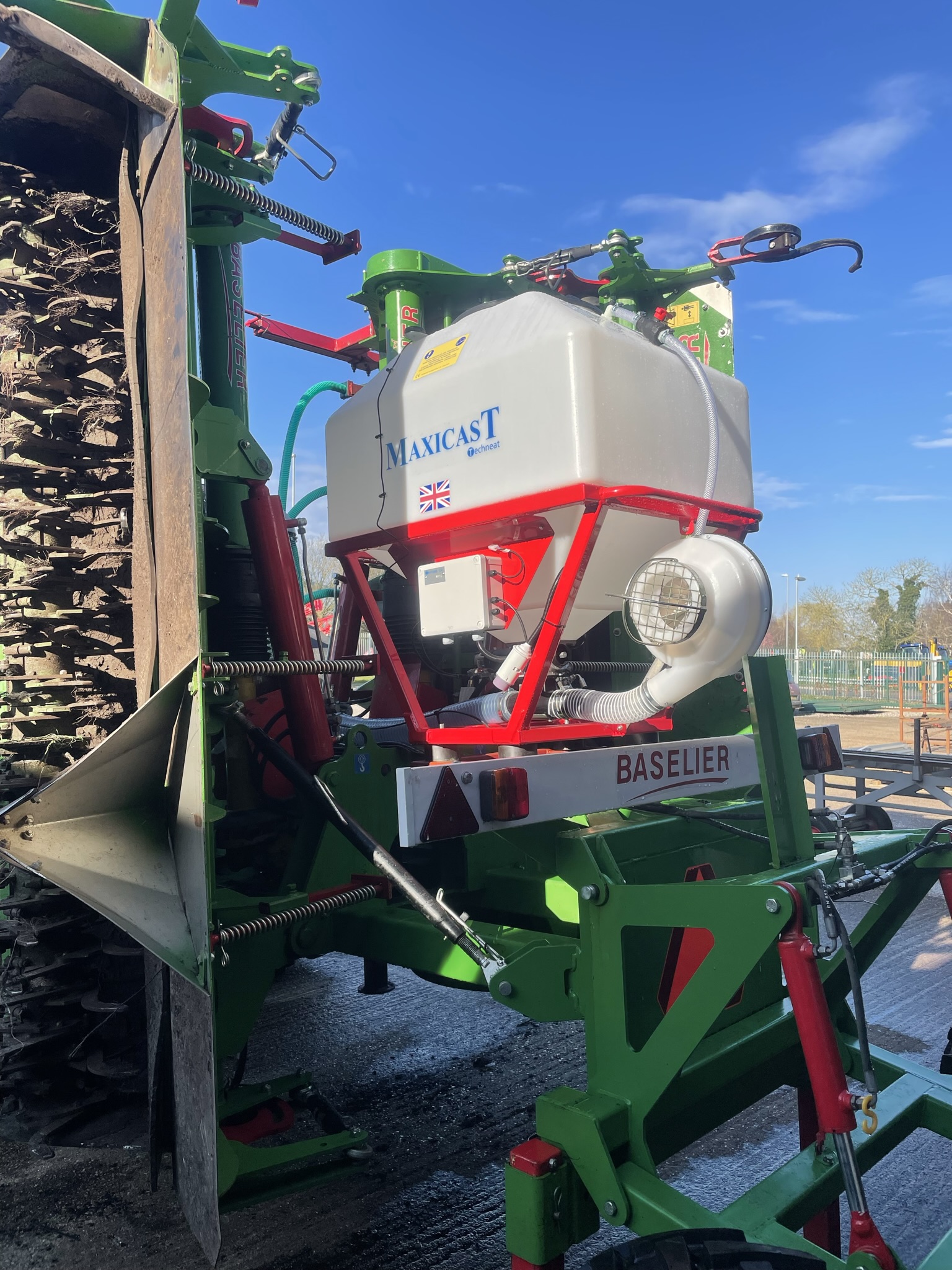
3. Pipework and Distribution: The Spinners & Fishtails
The distribution head is where the magic happens—but it’s also where things most often go wrong.
· Head Spinners: Ensure spinners are rotating freely. If there’s any resistance, the distribution across the rows will be lopsided.
· Pipework Integrity: Inspect all hoses for kinks, cracks, or perishing. A small split in a hose can lead to a significant environmental spill and a costly loss of product.
· Fishtail Alignment: Ensure your fishtails are correctly positioned for even incorporation. If they've been knocked or bent during storage, your "single pass" incorporation won't be effective.
4. The 3-Metre Rule: Shut-off Calibration
Remember, the NSP protocol requires that all applicators are fitted with an in-cab device allowing the operator to shut off the flow at least 3 metres before the end of the row. This ensures all granules are fully incorporated and none are left on the headland surface.
Now is the time to test your electronic clutches or shut-off motors. It’s much easier to fix a wiring fault in the workshop than in the middle of a 40-acre field.
Why It Matters
Stewardship isn't just about compliance; it's about keeping these vital tools available. The industry is under constant scrutiny regarding the use of granular nematicides. By ensuring your Techneat equipment (or any applicator) is serviced, calibrated, and NSTS-tested, you are doing your part to protect the future of the UK potato industry.
Need a hand with parts or a pre-season health check? Our team at Techneat is ready to help you get your cartridges, spinners, and pipework in peak condition. Give us a call or contact us to ensure you're ready for the first day of planting.
About the author
James English
Operations Director